
Manual Therapy Interventions
Dr. Shannon is a Certified Manual Therapist (CMT) and she utilizes her manual therapy skills to help create a “reset” to the tissue. While this is a part of the treatments that are provided at Believe Physical Therapy & Performance, it’s important to note that manual therapy is only part of the recovery process and is best utilized in conjunction with exercise.
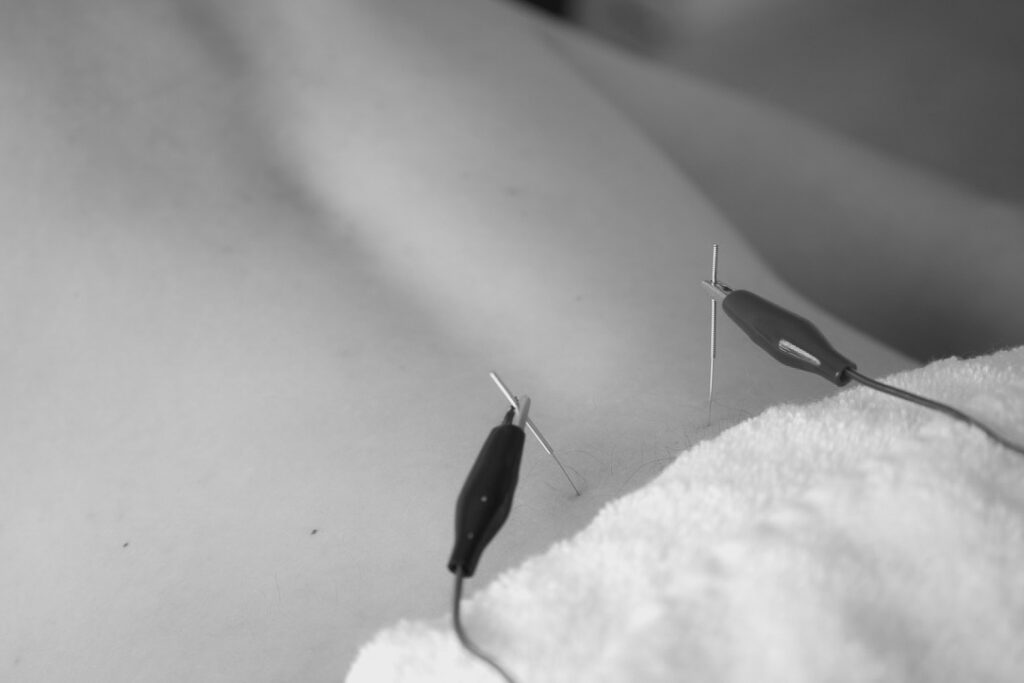
Functional Dry Needling
Functional Dry Needling (FDN) is an intervention in which a trained Doctor of Physical Therapy uses a monofilament needle paired with electrical stimulation to create a “reset” to the target muscle.
When there is inflammation, pain, or increased tension in the muscle tissue, there can be an interruption in the connection between the nervous system, which tells the muscles what to do, and the muscles themselves. As a result, the muscles are not as efficient at activating to their full potential, which can lead to further irritation, pain, and muscle soreness/stiffness.
FDN uses electrical stimulation to stimulate the target tissue and improve the connection between the nervous system (your brain and spinal cord) and the muscles. This “reset” helps your body move better and learn how to more efficiently activate the muscles, which facilitates healing, better mobility, and the ability to gain strength/stability with decreased pain or limitations.
Frequently Asked Questions
- Does FDN hurt?
- Pain is an individualized experience, so it’s hard to give a clear answer to that question because everyone responds differently to FDN. Generally, you can expect to feel an “ache” when the needle reaches the target muscle, and then a comfortable “heartbeat” or a “pulsing” when the electrical stimulation is applied. Most people respond immediately after the treatment and report a decrease in pain. It is common to feel mild soreness after FDN that can last up to 12-24 hours.
- How often can I get FDN?
- It depends! If you have chronic pain (i.e. you’ve had pain for more than 6 weeks), it may take several rounds of FDN to help reset that tissue. Other people may only need 1-2 rounds of FDN. Your Physical Therapist will perform a skilled assessment at each visit to determine if FDN is warranted.
- Is FDN safe?
- Yes! The Physical Therapists who perform FDN are certified and have years of experience performing this skilled intervention.
- There are risks associated with FDN. Our team uses expert knowledge of anatomy and years of practicing the skill in order to mitigate the risks. These risks include:
- Infection
- Bruising/bleeding
- Pneumothorax if needling in the lung field
- Soreness
- Before you experience FDN for the first time, your Physical Therapist will discuss the risks and ask you questions about your health status in order to make sure that you are a good candidate for this intervention.
- What should I wear?
- We recommend wearing workout attire to your physical therapy sessions. If possible, try to wear clothing that allows your physical therapist to access the body part for which you are being seen. Your physical therapist will always needle directly on the skin and never through your clothing.
- Does it cost more to have FDN?
- No. The cost of FDN is included in the cost of the session.